
Invasive weed
control on
difficult terrain.
Great Southern
& Southwest WA.
ARC11 provides remote-controlled vegetation management targeting invasive weeds on steep slopes, drainage corridors, and access-constrained terrain across the Great Southern and Southwest — where conventional manned plant can't safely or effectively reach.
The hardest infestations
are often in
the hardest places to reach.
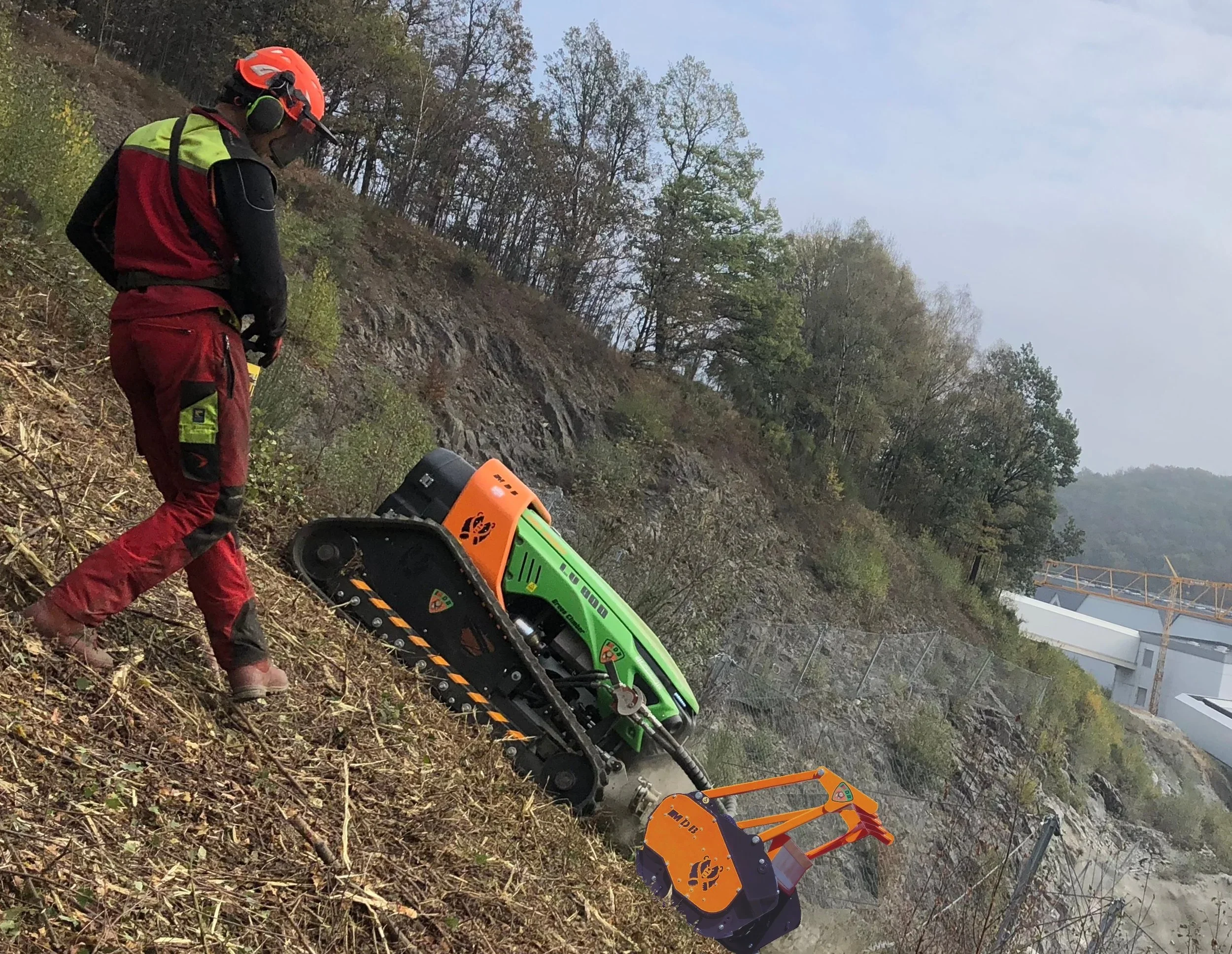
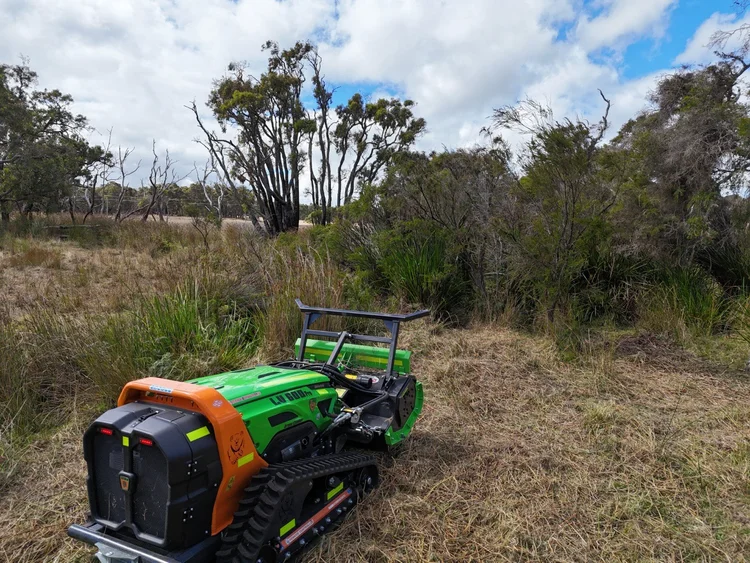
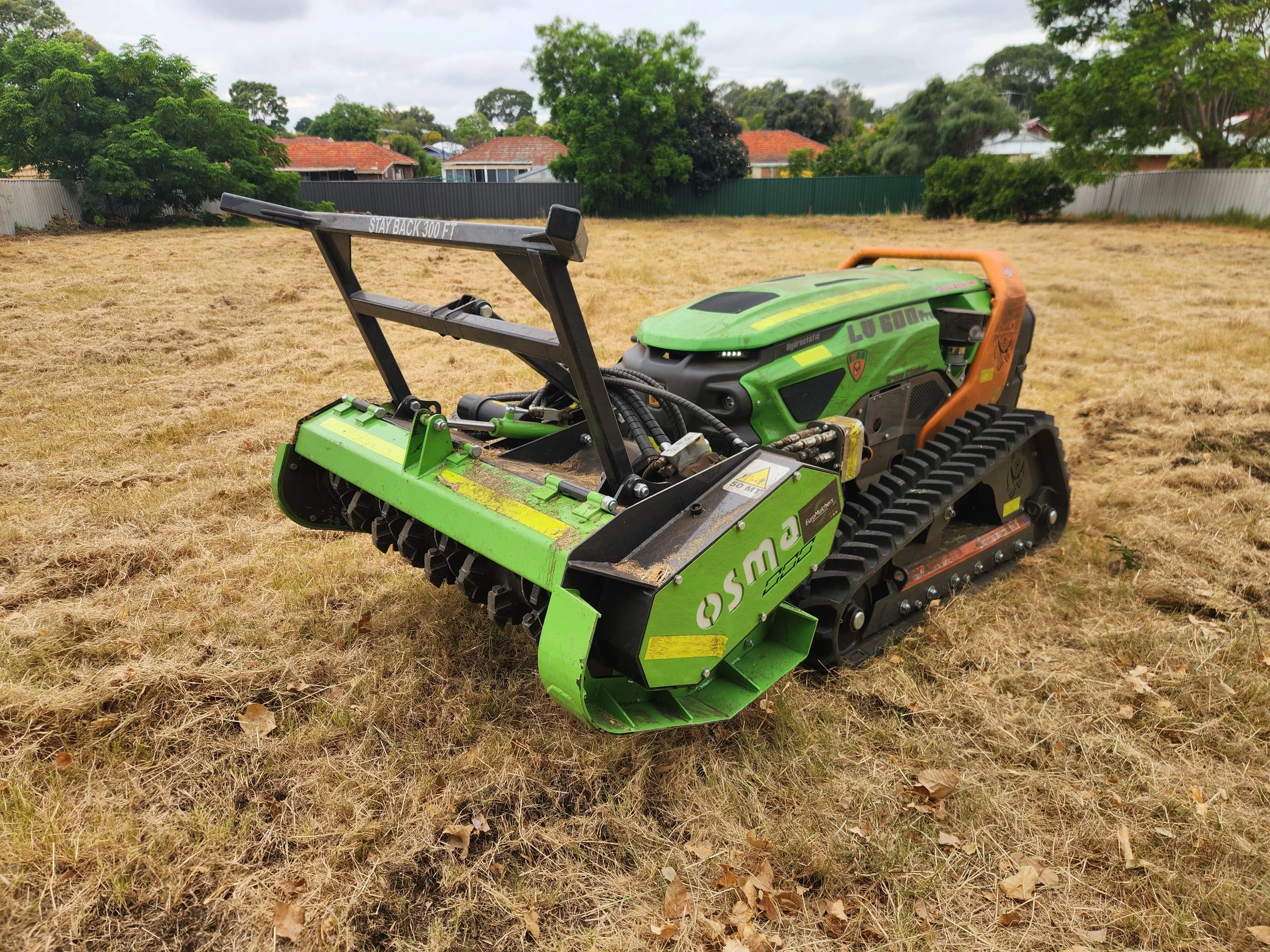
Some of the most difficult weed infestations occur on steep creek banks, drainage batters, roadsides, hillside remnants and post-fire regrowth areas where conventional equipment cannot safely or effectively operate. ARC11 provides initial mechanical vegetation reduction using remote-controlled equipment on difficult terrain. This can reduce dense growth, improve access and support an integrated weed-management program. Species-specific follow-up treatment, hygiene controls and ongoing monitoring may still be required.
Leaving weeds on difficult terrain because it's too steep or too wet for standard plant is how infestations spread. ARC11's remote-controlled equipment operates where other machinery can't — removing the infestation without removing the operator from safe ground.
"Effective weed management must reach the difficult terrain where infestations persist and spread."
- —Steep creek and drainage banks — rollover risk prevents safe mowing where Arum Lily and Blackberry thrive most
- —Soft and wet ground — heavy plant churns up soil and damages drainage lines, spreading weed seeds
- —Post-burn regrowth — unstable ground after fire events limits safe machinery access during critical weed control windows
- —Dense established infestations — thick Blackberry, Gorse, Sydney Golden Wattle and Pampas Grass require mulching capability standard mowers lack
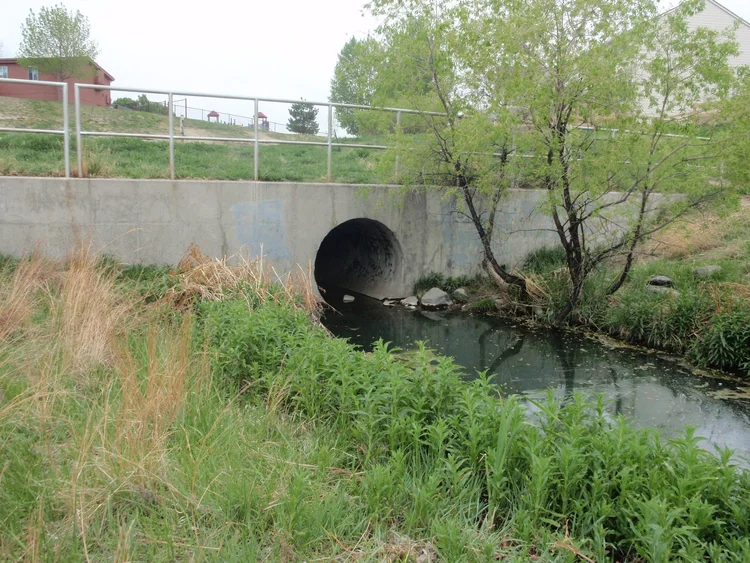
- —Asset-adjacent sites — drains, fences, culverts, and water infrastructure limit where conventional plant can safely operate
Common weeds of
the Great Southern and Southwest WA.
One of the most significant declared weeds in the Great Southern and Southwest. Arum Lily colonises creek banks, drainage lines, roadsides, and disturbed ground — particularly on the moist, sheltered slopes where it's hardest to treat with conventional machinery. Dense colonies can cover entire drainage corridors, reducing pasture productivity and spreading rapidly through corm fragments and seed dispersal.
Blackberry is one of WA's most widespread declared weeds and a significant problem across the Great Southern and Southwest. Dense, thorny thickets establish rapidly on creek banks, hillsides, roadsides, and disturbed ground. Its arching canes root where they touch soil, making physical control critical. Infestations on steep slopes and creek lines are particularly difficult to address with conventional mowing equipment.
Gorse forms dense, impenetrable thickets on hillsides, roadsides, and disturbed terrain in the wetter parts of the Great Southern and Southwest. It's highly flammable, making it a significant fire risk on slopes adjacent to residential and rural properties. Dense spiny growth makes manual control difficult and dangerous, and its seed bank persists in soil for decades. Effective control requires mechanical mulching to reduce fire fuel load and infestation density.
A wattle from eastern Australia that has become a serious environmental weed in southern WA. It forms dense thickets along coastal dunes, road verges, creek lines and bushland edges, shading out native plants and building up fuel load. Its seed stays viable in the soil for years and germinates in large numbers after fire or soil disturbance, so cleared stands can quickly come back thicker.
Also called paradox wattle, this spiny shrub from eastern Australia has naturalised in parts of southern WA. It forms dense, prickly thickets on roadsides, disturbed ground and bushland edges that are slow and hazardous to clear by hand, and it spreads readily from seed into surrounding areas.
A fast-growing South African shrub, known in WA as Taylorina or blue butterfly bush. It invades creek lines, wetland edges, drains, roadsides and bushland across the Southwest and Great Southern, forming dense stands that crowd out native vegetation. It is a heavy seeder, and its seed persists in the soil, so it often reappears after control.
A large ornamental tussock grass that escapes from gardens into drains, road batters, quarries, coastal areas and disturbed ground. Each plume can release huge numbers of wind-blown seeds, and the dense, sharp-edged tussocks are flammable and hard to remove by hand. Treating plants before the plumes set seed limits spread.
Bulrush, or cumbungi, can choke drains, dams, channels and wetland edges, slowing water flow, reducing capacity and trapping sediment. The introduced Typha orientalis spreads aggressively in the Southwest. WA also has a native bulrush (Typha domingensis), so check which species is present and whether any approvals are needed before works begin.
African Lovegrass is a significant weed on roadsides, embankments, and disturbed ground across the Great Southern and parts of the Southwest. It outcompetes native species, reduces pasture productivity, and establishes rapidly on road batters and drainage lines. Dense infestations on steep embankments and roadsides are difficult to manage with conventional equipment without significant rollover risk.
Bridal Creeper is a significant declared weed in woodland and bushland remnants across the Southwest and parts of the Great Southern. It smothers native understorey vegetation, climbing through shrubs and creating dense mats that eliminate ground-layer species. It thrives in sheltered, moist conditions — often on slopes and in drainage lines where access is constrained. Tuber systems make it highly persistent and difficult to eradicate.
Also known as Paterson's Curse, Salvation Jane is a significant declared weed on roadsides, pastures, and disturbed ground across the Great Southern and agricultural areas of the Southwest. It's toxic to livestock and competes aggressively with pasture species. Dense infestations on steep road batters and drainage lines require mechanical control to reduce seed set and prevent further spread into adjacent land.
Kikuyu is an aggressive pasture grass that becomes invasive on roadsides, drainage lines, creek banks, and disturbed ground across the wetter parts of the Great Southern and Southwest. It spreads by stolons and rhizomes, smothering native vegetation and becoming extremely dense on moist slopes and drainage corridors. Infestations on steep banks and creek lines require mechanical management to prevent wholesale displacement of native vegetation.
Official weed information
Weed classifications, control requirements and declared-pest status can change. Confirm current requirements through the WA Government declared weeds information and the Western Australian Organism List .
Mechanical weed
control where
it's needed most.
Mechanical control is a critical component of any integrated weed management program — particularly for established infestations on terrain that's inaccessible to conventional equipment.
ARC11 doesn't replace herbicide programs. We make mechanical control possible on the terrain where infestations are most established and where conventional plant can't safely or effectively operate — giving herbicide and revegetation programs the best possible starting point.
- —Access to difficult terrain — up to 60° slopes, soft ground, drainage batters, and constrained corridors
- —Dense scrub processing — tungsten-carbide head mulches Blackberry, Gorse, and Briar Rose up to 150mm in a single pass
- —Low ground disturbance — 2.4 psi ground pressure minimises soil disturbance and weed seed spread during treatment
- —Mulch stays on site — processed material remains as ground cover, reducing erosion risk after treatment
- —Operator safety — remote-controlled operation keeps personnel off steep, unstable, and weed-covered terrain
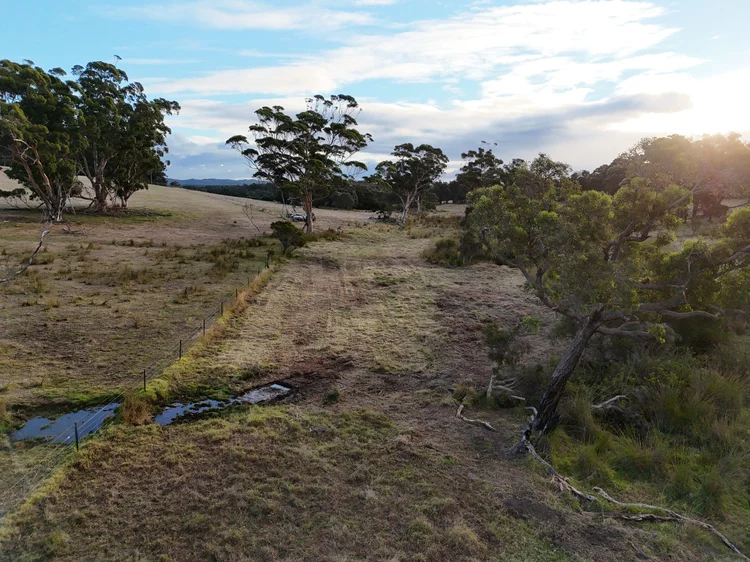
Great Southern
& Southwest WA.
ARC11 is based in the Great Southern and operates across the region's diverse terrain for weed management — from Albany's coastal slopes and Denmark's karri country to the agricultural land of Katanning and Kojonup, and across the Southwest from Bunbury to Pemberton.
- —Great Southern Albany · Denmark · Mount Barker · Katanning · Kojonup · Cranbrook
- —Southwest Bunbury · Busselton · Margaret River · Nannup · Pemberton · Manjimup
- —Beyond Contact us with your location — we service broadly across WA for larger engagements